International Engineering Ambassadors
Insight into the life & course of international students.
Showing posts with label #InternationalEngineeringAmbassador. Show all posts

Monday, 8 May 2017

A Taste of The World at the University of Sheffield

Written By: Rishi Parwani

Every year the International Students’ Committee puts on a myriad of spectacular events ranging from the International Cultural Evening, World Week and most recently; The World Food Festival. This year, 12 societies took part and stepped up to showcase their dishes to an audience of hungry students, myself included. World Food Fest is one of my favourite events by the ISC because as I’m sure you may have gathered by now from my blog posts, I’m a massive foodie!
How the World Food Festival works is quite simple. The event takes place over a two-day period and all the participating societies are in competition with each other to win us over with their national delicacies. So I visited on the Saturday and the participating societies on the day were:
  • Malaysian Society
  • Romanian Society
  • Hungarian Society
  • Arab Society
  • Filipino Society
  • Sri Lankan Society
  • Sheffield Market Society
Upon arrival at the Octagon Centre where the event was taking place, I was stumped because it’s been a long time since I’ve been presented with so many options for a meal. Such is life for a student, don’t you think? I spent the first 15 minutes walking around getting an idea of what I should eat which wasn’t an easy feat at all.
After a brainstorming session consisting of mental pros-and-cons lists (just kidding, I’m not crazy), I finally decided to have a main course meal from the Sri Lankan Society. Our friends from Sri Lanka were serving Fried Rice with Prawn Curry which was spectacular. I was so lost in the bursting flavours of this dish that I only remembered to get a picture of it after I had finished eating all the prawns.
My craving for dessert lead me to the Filipino Society, who were serving a Mango Float cake for dessert. This was essentially a cake consisting of a sweet mango cream with crushed digestive biscuits and I can’t emphasise how good it was. It was genuinely my favourite dish from the entire event and I’m definitely going to be spamming the Filipino Society Facebook page for their recipe! My photos definitely don’t do it justice but you’ll just have to trust me on this one.
Still craving for more, I paid a visit to the Arab Society because having grown up in the Middle East, I absolutely love eating Arabic food. I was over-the-moon to discover that they were saying Um-Ali, a traditional Arabian dessert that combines the creaminess of bread pudding and cinnamon nut stuffing of baklava. Its warm and soft texture transported me back home. Kudos to Arab Society!
By this point I was absolutely stuffed to eat more from the other societies but both Romanian and Hungarian society had some excellent dishes on offer, not to mention their desserts which looked incredible.

I rounded off my food-eating marathon with a smoothie from the smoothie-stall run by the Sheffield Market Society, a brand new society that is in contact with local markets and sources fresh ingredients. There was a huge variety of smoothies to choose from however after the amount of food I had just consumed, I decided to go down a healthier alley and tried the banana smoothie which was so refreshing.
So there you have it. The amalgamation of cultures and cuisine at the Food Festival just supports how much I love studying here in Sheffield. The international exposure at this university is second-to-none and it just goes to show that an engineering degree at this university is so much more than you can ever imagine. A massive thank you to the ISC for pulling off such a fantastic event!

Wednesday, 4 January 2017

Summer Internship Experience in Malaysia by Lucas L

I spent the summer of 2016 on the forefronts of development in the Malaysian construction industry, as I practiced on a futuristic tool that has revolutionized global construction. This is my story …


Dawn…

A tranquil ambiance blanketed the massive 34-acre site, sitting at the edge of Peninsular Malaysia’s administrative capital, Putrajaya. Early birds arriving on site enjoyed the cool morning climate, coupled with the scent of fresh earth and concrete around the bare land. Welcoming workers entering the site was a giant sign naming the “Parcel F” site while banners of Sunway Construction fluttered proudly along the perimeter fence.

30 minutes later…

The silence was replaced with blaring sirens, signaling the start of the workday. Trucks, rollers, and bulldozers roared to life; towering cranes recovered from their dormant states, controlled by their puppeteers. Site engineers took their places around the 10-office-block site, skillfully directing workers in mending steel and casting concrete. I, had the privilege of being assigned to the company’s pioneering Building Information Modeling (BIM) department. I headed to the satellite office at the edge of the site, ready to start my day as an intern BIM engineer.

Just for your information, BIM was a budding piece of tech in the historical construction industry. The system utilizes a series of computer programs to generate an accurate digital representation of a structure, allowing also the effective management and optimization  of various aspects throughout the construction supply line from design, coordination, and delivery.

The Malaysian construction industry had only begun to embrace this newfangled system. Design works are typically conducted using conventional methods (sketches, 2D CAD, human calculations etc). Sunway Construction, being an innovative player within the local construction industry, had recently begun to integrate this technology recently into their supply line.  

Armed with a computer and a plethora of plans given by design consultants, my job comes in in the early stages of the BIM supply chain, in which I produce/amend structural and

architectural models. ‘Accuracy’ and ‘buildability', are the two words that summarize the critical aspects of my job. An accurate representation of the actual structures was vital as the models will be used for analysis throughout the production line. In order to deliver a high level of  accuracy, I had to dig through a trove of design plans and detailed drawings. A ‘buildable’ structure was ensured through a critical analysis of the model, i.e. there was a need to be able to identify and report design failures or discrepancies, between the design detail of all trades as the models are being made (architecture, structural, mechanical and electrical) to ensure the structure could be delivered smoothly on site.

The true effectiveness of BIM becomes apparent down the supply chain. Utilizing the delivered models, experienced engineers will then conduct further checks such as clashes with services, plan construction phases and conduct precise estimates of material volumes required for construction. The final product will then be a model that integrates the complete set of information of the true structure being built. From then on, plans are shipped out to site engineers for casting.

The main advantage of my industrial experience was witnessing the deviation of the engineering field from the conventional tedious calculations and field labour to a more effective technocentric path. I have to admit that the emphasis placed on technological fluency at the University in structuring their course, runs parallel to industrial requirements, allowing me a quick transition into my placement role. Just writing this article brings back memories of  recent  MATLAB programming coursework, which prompted students to figure out the most effective algorithm to analyze parameters and determine the most effective method of training a baseball player (slightly unorthodox for civil engineers, but a fun topic nonetheless). The principles of optimization using technology highlighted by such coursework from the underlying principles of which BIM is established for.

At the end of the 12 weeks, my industrial training program came to an end and so did a chapter of my student life. But with this experience, I now possess an insight which will be helpful in my preparation for the future as the global construction industry treads down this technocentric path.

Wednesday, 28 December 2016

Project Phoenix – Yes, we can!


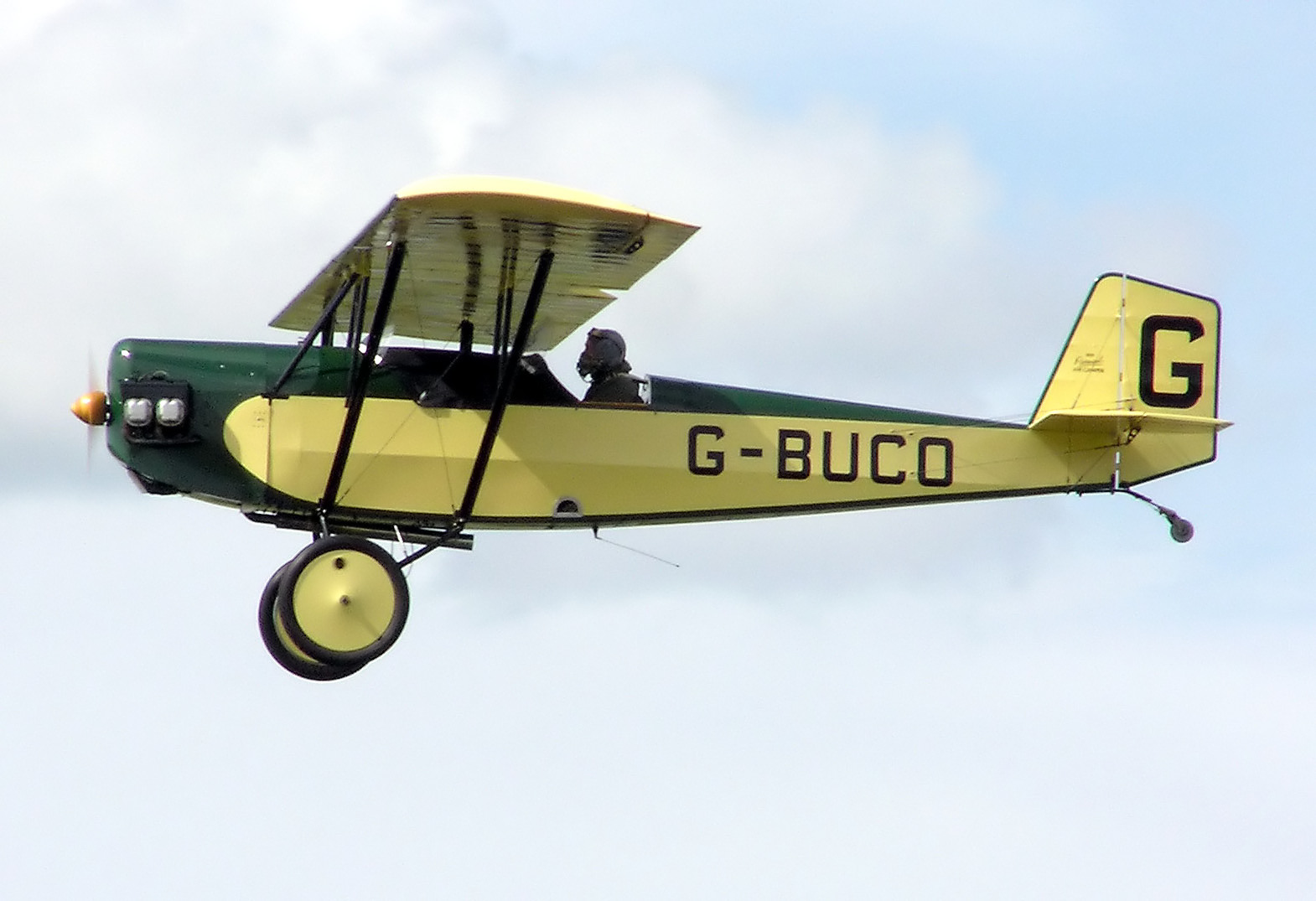
“Yes we can” is a slogan used by United States President Barack Obama in the 2008 Presidential Campaign which best describes Project Phoenix - a student led project at The University of Sheffield aiming to construct a full size 1920's single engine two seater Pietenpol Air Camper aircraft.
Hello,
My name is Andrei Roibu, I am an IEA and for the past 10 months (from February until December 2016) I worked as the Project Manager of this ground-breaking student endeavour. Today, I want to to tell you a bit about the project itself and its journey to date.
https://upload.wikimedia.org/wikipedia/commons/3/3b/Pietenpol.air.camper.g-buco.arp.jpg
Project Phoenix was first proposed to me by Dr. Simon Hayes at the end of 2015, when he came up with the idea of a student project aiming at constructing a full-size kit aircraft in order to showcase the abilities of our students, here at the University of Sheffield, and the technical and manufacturing capabilities of the workshops in the Diamond building. At that time, I was President of Simurq Aeronautics, a student-lead society aiming at constructing drones and RC planes and taking them to competitions. Honestly, when I first heard the idea I did not believe that it could be done, as it seemed too complex and too costly for students to reproduce. I held on to my doubts for months, all through Christmas and the 2015-16 winter exam season, however, Dr. Hayes kept pitching the idea to me and insisting that we can do it. Honestly, I don’t know what made me accept his project proposal, as I was still doubtful about the project's chances of success. To some extent, I was probably curious to see how far we could go with this seemingly insane idea until we reached that point where it would have become obvious it was too much to handle. Hence, Project Phoenix was born.
From February until April, the project team consisted of Dr. Simon Hayes, Mr. Richard Stockley (one of the Diamond technicians), Dr. Stephen Mason and I, worked mainly into looking at different kit airplanes and trying to find the required funding for the project. Our first major breakthrough came when we managed to receive a sponsorship for £11,000 from the University of Sheffield Alumni Fund, which came as a surprise to all of us considering that little to no student projects ever received such a large sponsorship. This was probably the moment where we started realizing the scale and magnitude of what we were planning on doing. At this point we were looking at building a Zenith STOL CH750 aircraft and we were estimating the entire project to run for 3 years, requiring a budget of around £60,000. This might seem as a big number, however we were quite confident that we could obtain the sum from further university grants and private company sponsorships, as we were already getting a lot of attention from the various engineering departments.
As April was coming to an end, so was my term at the helm of Simurq Aeronautics. The project, at that time named ‘The Alumni Aircraft Project’ – I know, not a very catchy name – was intended to be done in collaboration with Simurq, which made me assume that as my term ended so would my involvement with the project. It was at this point when Dr. Hayes asked me if I wanted to be the overall leader of the project, which took me by surprise. This put me in very delicate position, as beside the project I was managing two part-time jobs at the Sheffield Students’ Union while also studying towards my degree in Aerospace Engineering. The solution that I found was that of a joint student leadership, having myself as the Project Manager, in charge of all the non-technical aspects of the project and the overall management, and bringing a second person on board as the Technical Manager. My first choice for the role was a Mechanical Engineering student, which initially accepted and came on-board from April until May, however as the spring exam season kicked in, she decided that she needed to prioritize her studies. The second choice for the role was an avionics stream Aerospace Engineering student, which at that point was keen on getting relevant technical and managerial experience and had all the attributes for the position. At the moment of this blog’s writing, after my departure from the project, he has assumed full Project Manager status.
The next milestone in the history of Project Phoenix was the worldwide famous Brexit. In the weeks following the UK’s decision to leave the EU, the entire team met regularly in order to assess how this impacts us, realizing that the initial budget estimate was now overly ambitious in the looming future economic climate. This was the moment when we decided that we should adopt a simpler design, for which most if not all of the materials and tools could be bought on the already available funds, with any subsequent sponsorship or grant being used for further improvements and modifications. After an extensive market research, we decided on the Pietenpol Air Camper.
Over the summer, planning was done for the workshop, team structure, branding and a future sponsorship campaign. All the while, the project kept growing and growing, gaining more and more attention from the different departments within the University and from across faculties. At the start of the academic year, we ran a recruitment campaign and selected the team, thus kick starting the work on the project itself.
At this point in time, Project Phoenix is the flagship project of Aerospace Engineering in Sheffield and the largest undergraduate project ever undertook at the University of Sheffield. The projects is seeing the participation of over 30 students from across all the departments of the Faculty of Engineering and also from other faculties, such as Social Sciences. All levels of study are represented within the project, from first year students to postgraduates and PhDs, with the project members gaining substantial engineering and managerial experience.
Project Phoenix is registered with the Light Aircraft Association, which allows the construction of the aircraft using the original blueprints. The Pietenpol Air Camper is an empiric design, as such, it has never been modelled, and its design never analysed. Alongside construction, a dedicated research team within Project Phoenix is looking into potential ways of improving upon the design, analysing its structural dynamics and the airflow around the plane, utilising this data to implement our own flight simulator and publish research papers in engineering academic journals. Rigorous manufacturing standards are implemented throughout the construction process, insuring that the students participating in the technical teams obtain relevant manufacturing knowledge and the final aircraft receives its flight accreditation. Moreover, the project benefits from a dedicated management team, where a group of students are gaining valuable experience in managing the bureaucracy and regulations entailed by a project of this magnitude, while also helping insure a friendly climate for their peers working on the project. In addition to this, the project aims at promoting most if not all of the participating students, with the help of the University Marketing Department, through social and classical media, both on a local and nationwide level.
In the past 10 months, I have seen this project grow from a seemingly impossible idea to the largest undergraduate project ever undertaken at The University of Sheffield. I look back with pride on what we have achieved in such a short time while also looking to the future with great hope and great expectations. I have left Project Phoenix at the beginning of this month, due to academic and health reasons, however I am proud to be one of its’ founding fathers. Coming back to where we started, if I would be asked now if undergraduate students can build a full-size aircraft from scratch, I would proudly tell them:

“At the University of Sheffield, yes, we can!”
PHOENIX - PNG - CMYK-01.png

Wednesday, 7 December 2016

Sheffield Engineering Leadership Academy (SELA) by Hemanshi Galaiya

As a student at TUoS, I have opportunities lying right at my feet that only need to be picked up at the correct time and this year has been the perfect time for me to participate in a life changing program. This exclusive program inspired by the acclaimed Gordon Leadership Program at MIT is an intensive 2-year-long extra-curricular leadership scheme that provides the perfect set-up for me to develop myself even further.

It is a well-known fact that the UK is in shortfall of engineers, especially in industry. What is even more alarming is that there are even fewer people equipped with the skills to become leaders in the industry. TUoS is combatting this situation through a multifaceted program famously known as SELA.

My journey with SELA began sometime in mid-march when applications opened. If you didn’t believe me when I mentioned intensive then let me give you evidence now. Each year applications are opened exclusively to first year students on Meng Courses across all departments. In order to identify visionaries, the application not only requires you to talk about your skills but also demands to known what you aim to get out of the program and what you could bring to the team.
Once, your application has gone through the radar, it is now time to demonstrate all the skills you so flamboyantly mentioned. The next step in the recruitment process in an interview with the board members. Here, you get the opportunity to paint the picture of the type of person you are. First, I was required to talk about the leaders that inspire me. Then, produce a 2 minute long pitch about ‘Why I should be selected to join SELA and what I will bring if I am selected.’ Lastly, I was put under the spot light and asked questions regarding some of the tougher aspects of life such as the biggest challenge I faced and how I overcame it.

Only about 0.02% of all engineering students at the university get into the program. The selection process is rigorous and requires demonstration of leadership and project management capabilities. Now, I know many of you are already thinking about saving yourself the trouble and planning to choose the easier option if being lazy. Yet, I would encourage you to give it a go.

Here is why…

Once, the tough part is over, the best part starts. The SELA program encompasses sessions in which members develop and enhance skills. One of the first steps of the program is an induction boot camp. This year, we were taken to a ‘secret’ location where we spent a weekend packed with small workshops for skill building. In each session we were faced with a different task which required using analytic, theoretic and intuitive skills amongst others. Yet, the best part of the boot camp for a student is undoubtedly the leisure of the swimming pool, sauna and hot baths at the golf resort and the scrumptious food prepared especially to meet your taste.

The last task of our boot camp involved building a marble run. Well, you might think that a marble run is fairly easy to make, isn't it?
However, the twist was that we had to do it in 3 different teams each of which were given a different set of information to build a different section of the marble run. That wasn't all, the teams weren't allowed to communicate with each other directly, only one individual from each team could talk to each other and that is when we discovered that between 3 teams, only 2 pairs of scissors were provided. We were already dealing with limited resources, limited communication and then 10 minutes into the task they announced a change in the specification of design and that is when we got an even more real taste of life in engineering!! Our design didn't work at first but after a little improvisation, our master piece past the test!

After the official induction was over, we were introduced to our project for the year; an Outreach Event aimed at promoting engineering to the general public. 10 weeks into the program and I have got additional sessions to develop skills in negotiation, networking, public speaking, project management and enterprise among others via workshops, networking events and technical and industrial experience opportunities. I have interacted with individuals that have the most absurd and yet most brilliant ideas. As part of the requirement to ‘graduate’ from the program, I have to undertake 2 different internships either in research or industry and day-in-day-out, we are introduced to opportunities via the SELA board and I can't wait to get started with my first placement this coming summer.

Personally, I feel guaranteed that this program will enhance my endurance, determination and focus and make me a better leader because it provides a practical approach to engineering - various projects will give me an insight into the process of research thereby paving way for further academic involvement which may encourage me to take up a role in teaching instead of entering the industry. The guest speakers that are invited will help me grow professionally as I will learn from their experiences. Working in more diverse engineering teams will teach me various skills and hence set me apart from others. All in all, it will create networks and industrial relationships for me so that I have an early start in my career.


To end it all, I hope that my experience with SELA will be a legend that will inspire individuals to become the next generation of engineers because this multifaceted program augments technical knowledge by giving a true taste of both research and industry.