International Engineering Ambassadors
Insight into the life & course of international students.
Showing posts with label #Aeroscapeengineering. Show all posts

Thursday, 1 March 2018

Engineering You’re Hired ! – 2018 by Ioan-Alexandru Herdea


“How was your EYH?” This is the second most common question for a University of Sheffield student.The first question is “How did your exams go?” I would like to  clarify that EYH stands for Engineering You’re Hired. As my IEA colleagues, Rishi Parwani and Hui Choo  have already written it is the second week-long project for engineering students. All first year engineering students at the University of Sheffield take part into GEC (Global Engineering Challenge) and in the second year they take part in EYH.

At the beginning of the week, all attendees are informed that the final award is a box of chocolates. Well, I can assure you, that it is a lot more than that. You are assigned to work in a group, alongside six other students who you may not know or have ever met. The only common aspect is that you have all selected to work on the same project. By the end of the week by Friday, you and your group have to come up with a solution to a project and then present this to a panel of judges. In addition to this you have to produce a report based on your findings. The report needs to be a maximum of 1700 words, bearing in mind there are 6 members in the group, means it’s a lot less words per head! You do gain a lot of skills from this competition namely working in a team, critical-thinking and research skills, which are excellent for any CV.

The project begins from the very basics and you gradually work through to the final product, which has to include details about costings, materials required, components, type of workforce and so on. The project my team was working on was about swarm robots for agriculture, we had to agree on how many drones the system would require and also research what materials would be the most effective to use in California, as it gets very hot during the summer. Nobody wants a drone to start melting whilst fertilising the fields. So, there was a lot of research involved, or in other words, a lot of time spent scrolling on Google.

It was a great experience attending the interview and to have the opportunity to talk about your team-working abilities and to discuss our conclusions. EYH is such a useful week in terms of employability as you have to use terminology and language which is frequently used by employers.This is significant as there are very few Universities in the UK that offer this kind of programme. The experience will not guarantee you a job, but it will help you to adapt easier in the future, when working with new team members from different cultures and engineering disciplines. In addition to this, it makes you look at things in a different way as you have to consider other people’s way of thinking and finding a way of working together.

In conclusion, EYH is extremely useful, not only on a personal level in the enjoyment and the taking part, but you also develop and enhance many different skills other than academic ones.

Rishi Parwani : http://ieasheffield.blogspot.co.uk/2017/02/engineering-youre-hired-or-one-step.html 
Hui Choo : http://ieasheffield.blogspot.co.uk/2016/02/engineering-youre-hired-2016.html

Wednesday, 8 February 2017

Engineering You’re Hired! Or one step closer to being hired! - by Rishi Parwani

Sheffield is one of the very few universities in the country to offer a project week devoted to further developing our acquired engineering skills. ‘Engineering You’re Hired’ is the second year equivalent to the ‘Global Engineering Challenge’ which has been highlighted by my fellow ambassador, Muhammad Zainudin in a previous blog post. In this post, brought to you by yours truly, I’ll be sharing with you my experience of taking part in EYH.  


What does the week involve you ask so curiously? Essentially, we are put into multi-disciplinary teams consisting of engineers from different disciplines and given a project to which we have to propose a solution in the form of a pitch to a company who would fund the project. My team consisted of Mechanical, Electrical and Electronics, Information Technology and Business as well as Aerospace Engineers and we were asked to design a commercial electric or hybrid aircraft in response to the rise in use of hydrocarbons in the commercial aviation industry.


The project brief was open ended which really allowed us to explore many different conceptual designs. This was where our creative juices flowed best and the Aerospace geek in me was so excited to be part of such an enthralling project. Our first day consisted of coming up with initial ideas as well as considering different factors (i.e. Political, Economic, Social, Technological, Legal and Environmental) – this really helped us in deciding what we wanted in our final design and what we had to prioritise in order to ‘get the funding’ for our final presentation at the end of the week.


What I really appreciated about this project week and my given topic was that it genuinely gave me such a good insight into the career that I’m about to launch myself into after I graduate. I’ve always been fascinated by the Aerospace industry and taking part in EYH really opened my eyes to how conservative the industry can be which is no surprise given the safety record commercial aviation currently possesses. Not to mention how costly it is to get an aircraft into service. This week was all about researching the specifics and on average we learnt that it takes over 15 years from initially designing an aircraft to its first flight with total investments upwards of £6bn! I found this fascinating as I never really delved into specifics of costs and investments required for aircraft manufacture.


Without boring you too much with the technical details, our final design incorporated a blended wing body which is essentially an aircraft which has the wings integrated into the fuselage. They look like UFOs from certain angles and are really quite fantastic dramatically reducing fuel consumption (by about 15% which is A LOT in this industry) which is one of the main reasons we pitched this as our final design.


Every day of the week consisted of working hard on our final designs competing with other groups to be ‘granted the funding’ as well partaking in presentations in the form of a Boardroom. This would consist of a short 2-3-minute presentation so that our facilitators could monitor our progress throughout the week as well as ask us about designs and why we’ve chosen them as such. On the Wednesday, an industrial mentor partook in the Boardroom session and our team was selected for being the ‘Most Professional’ which really did motivate us for pressing on with the rest of the week.


Even though we didn’t win the best pitch in the end, my team and I had a great week learning more about the commercial aviation industry, coming up with the final design as well as refining our engineering skills. It was a pleasure working with them and getting to know them. I genuinely enjoyed being able to apply what I learnt in lectures and am even more excited about the prospect of being an Aerospace Engineer in industry as a result of EYH. My career in Aerospace is one step closer to taking off.


Wednesday, 28 December 2016

Project Phoenix – Yes, we can!


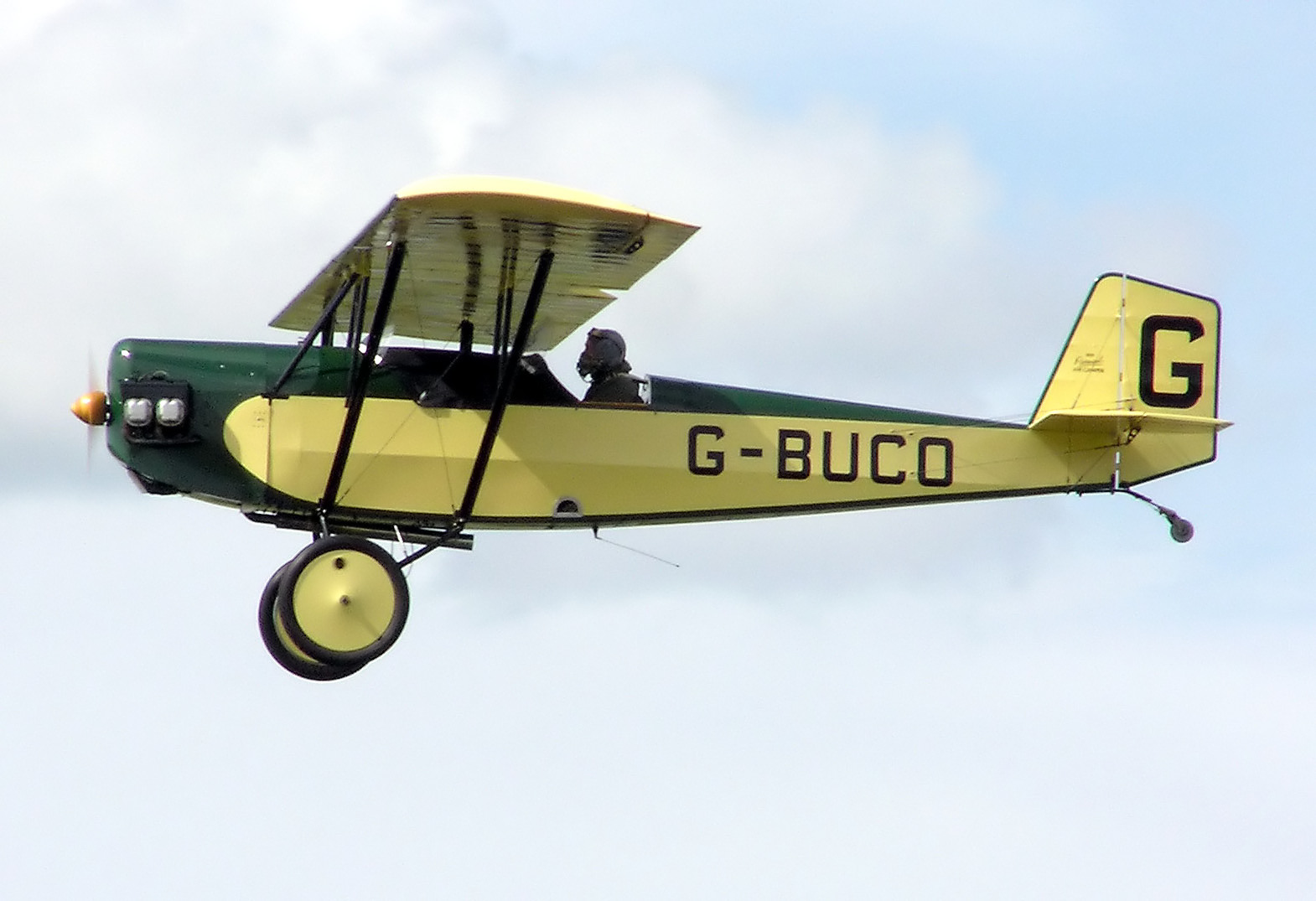
“Yes we can” is a slogan used by United States President Barack Obama in the 2008 Presidential Campaign which best describes Project Phoenix - a student led project at The University of Sheffield aiming to construct a full size 1920's single engine two seater Pietenpol Air Camper aircraft.
Hello,
My name is Andrei Roibu, I am an IEA and for the past 10 months (from February until December 2016) I worked as the Project Manager of this ground-breaking student endeavour. Today, I want to to tell you a bit about the project itself and its journey to date.
https://upload.wikimedia.org/wikipedia/commons/3/3b/Pietenpol.air.camper.g-buco.arp.jpg
Project Phoenix was first proposed to me by Dr. Simon Hayes at the end of 2015, when he came up with the idea of a student project aiming at constructing a full-size kit aircraft in order to showcase the abilities of our students, here at the University of Sheffield, and the technical and manufacturing capabilities of the workshops in the Diamond building. At that time, I was President of Simurq Aeronautics, a student-lead society aiming at constructing drones and RC planes and taking them to competitions. Honestly, when I first heard the idea I did not believe that it could be done, as it seemed too complex and too costly for students to reproduce. I held on to my doubts for months, all through Christmas and the 2015-16 winter exam season, however, Dr. Hayes kept pitching the idea to me and insisting that we can do it. Honestly, I don’t know what made me accept his project proposal, as I was still doubtful about the project's chances of success. To some extent, I was probably curious to see how far we could go with this seemingly insane idea until we reached that point where it would have become obvious it was too much to handle. Hence, Project Phoenix was born.
From February until April, the project team consisted of Dr. Simon Hayes, Mr. Richard Stockley (one of the Diamond technicians), Dr. Stephen Mason and I, worked mainly into looking at different kit airplanes and trying to find the required funding for the project. Our first major breakthrough came when we managed to receive a sponsorship for £11,000 from the University of Sheffield Alumni Fund, which came as a surprise to all of us considering that little to no student projects ever received such a large sponsorship. This was probably the moment where we started realizing the scale and magnitude of what we were planning on doing. At this point we were looking at building a Zenith STOL CH750 aircraft and we were estimating the entire project to run for 3 years, requiring a budget of around £60,000. This might seem as a big number, however we were quite confident that we could obtain the sum from further university grants and private company sponsorships, as we were already getting a lot of attention from the various engineering departments.
As April was coming to an end, so was my term at the helm of Simurq Aeronautics. The project, at that time named ‘The Alumni Aircraft Project’ – I know, not a very catchy name – was intended to be done in collaboration with Simurq, which made me assume that as my term ended so would my involvement with the project. It was at this point when Dr. Hayes asked me if I wanted to be the overall leader of the project, which took me by surprise. This put me in very delicate position, as beside the project I was managing two part-time jobs at the Sheffield Students’ Union while also studying towards my degree in Aerospace Engineering. The solution that I found was that of a joint student leadership, having myself as the Project Manager, in charge of all the non-technical aspects of the project and the overall management, and bringing a second person on board as the Technical Manager. My first choice for the role was a Mechanical Engineering student, which initially accepted and came on-board from April until May, however as the spring exam season kicked in, she decided that she needed to prioritize her studies. The second choice for the role was an avionics stream Aerospace Engineering student, which at that point was keen on getting relevant technical and managerial experience and had all the attributes for the position. At the moment of this blog’s writing, after my departure from the project, he has assumed full Project Manager status.
The next milestone in the history of Project Phoenix was the worldwide famous Brexit. In the weeks following the UK’s decision to leave the EU, the entire team met regularly in order to assess how this impacts us, realizing that the initial budget estimate was now overly ambitious in the looming future economic climate. This was the moment when we decided that we should adopt a simpler design, for which most if not all of the materials and tools could be bought on the already available funds, with any subsequent sponsorship or grant being used for further improvements and modifications. After an extensive market research, we decided on the Pietenpol Air Camper.
Over the summer, planning was done for the workshop, team structure, branding and a future sponsorship campaign. All the while, the project kept growing and growing, gaining more and more attention from the different departments within the University and from across faculties. At the start of the academic year, we ran a recruitment campaign and selected the team, thus kick starting the work on the project itself.
At this point in time, Project Phoenix is the flagship project of Aerospace Engineering in Sheffield and the largest undergraduate project ever undertook at the University of Sheffield. The projects is seeing the participation of over 30 students from across all the departments of the Faculty of Engineering and also from other faculties, such as Social Sciences. All levels of study are represented within the project, from first year students to postgraduates and PhDs, with the project members gaining substantial engineering and managerial experience.
Project Phoenix is registered with the Light Aircraft Association, which allows the construction of the aircraft using the original blueprints. The Pietenpol Air Camper is an empiric design, as such, it has never been modelled, and its design never analysed. Alongside construction, a dedicated research team within Project Phoenix is looking into potential ways of improving upon the design, analysing its structural dynamics and the airflow around the plane, utilising this data to implement our own flight simulator and publish research papers in engineering academic journals. Rigorous manufacturing standards are implemented throughout the construction process, insuring that the students participating in the technical teams obtain relevant manufacturing knowledge and the final aircraft receives its flight accreditation. Moreover, the project benefits from a dedicated management team, where a group of students are gaining valuable experience in managing the bureaucracy and regulations entailed by a project of this magnitude, while also helping insure a friendly climate for their peers working on the project. In addition to this, the project aims at promoting most if not all of the participating students, with the help of the University Marketing Department, through social and classical media, both on a local and nationwide level.
In the past 10 months, I have seen this project grow from a seemingly impossible idea to the largest undergraduate project ever undertaken at The University of Sheffield. I look back with pride on what we have achieved in such a short time while also looking to the future with great hope and great expectations. I have left Project Phoenix at the beginning of this month, due to academic and health reasons, however I am proud to be one of its’ founding fathers. Coming back to where we started, if I would be asked now if undergraduate students can build a full-size aircraft from scratch, I would proudly tell them:

“At the University of Sheffield, yes, we can!”
PHOENIX - PNG - CMYK-01.png

Tuesday, 29 November 2016

Meet Our International Engineering Ambassador: Rishi Parwani


Name: Rishi Parwani
Course: Aerospace Engineering
Nationality: British

Who am I and where I am from?
If I had to describe myself in three words, I’d say I’m a foodie, neat freak and a massive travel nut. Okay, that was more than three words but it’ll do. Hey guys, my name is Rishi and I’m a second year Aerospace Engineering student. Where am I from? Whenever someone asks me that I always give a different response because it’s one that makes a third culture kid like myself a bit nervous. Long story short, I’m half Indian, half Pakistani but born and brought up in the beautiful city of Dubai in the United Arab Emirates.

Why the University of Sheffield?
That’s a good question. Having grown up in a sunny country, why would I pack my bags and move to England? Personally, I’ve always wanted to experience what it would be like to study abroad. I chose the University of Sheffield mainly because of how the Aerospace Engineering course is structured here. I absolutely love how I have modules from so many different engineering disciplines as it’s given me such great exposure and I feel that are so many opportunities to practically apply everything that I’ve learnt here. However, I didn’t make the decision on the sole basis of academics. Of all the places that I applied to, I felt that I resonated most with Sheffield because not only would I get the chance to experience local culture, I would also be able to immerse myself in the international culture that the university is known for.

Why Aerospace Engineering?
I do Aerospace Engineering because let’s face it, it’s pretty cool to tell people that I do Rocket Science. Alright, jokes aside, I’ve always been fond of planes from a very young age. When I was just a few years old, my dad would drive me down to this parking lot near the airport and we would watch planes take off and land. Fast forward to over 10 years later, and we still do the same. I was hooked and I was always curious with how planes flew, how they were capable of flying long distances and I was just in awe so it feels pretty awesome that all that curiosity has lead me to this chapter in my life. My dream is to work for a commercial airline one day or anywhere where I’ll be exposed to civilian aircraft.

What do I love most about Sheffield?
I love how different Sheffield is to where I grew up. I love how green it is here, there’s an abundance of parks and green spaces and let’s not forget about how close Sheffield is to the Peak District. It’s just amazing that within 30 minutes you can be surrounded by some of the most beautiful landscapes in the entire country. It’s not only that though, I love the food in Sheffield too. Being a foodie means I always venture out to find new, quirky restaurants which Sheffield is just full of! There’s so many reasons to fall in love with this city. The people I’ve met here and the friends I’ve made are just absolutely amazing. Also, being the hilly city that it is, Sheffield has done wonders to my legs!

Advice?
If this is your first year in Sheffield, get involved in as much as you can! You’re probably tired of hearing this all the time but this is the best way to meet new people and even pick up a new hobby. Also, explore the UK! There are so many amazing cities and places to visit so make the most of your time in the UK.