International Engineering Ambassadors
Insight into the life & course of international students.
Showing posts with label Andrei. Show all posts

Wednesday, 28 December 2016

Project Phoenix – Yes, we can!


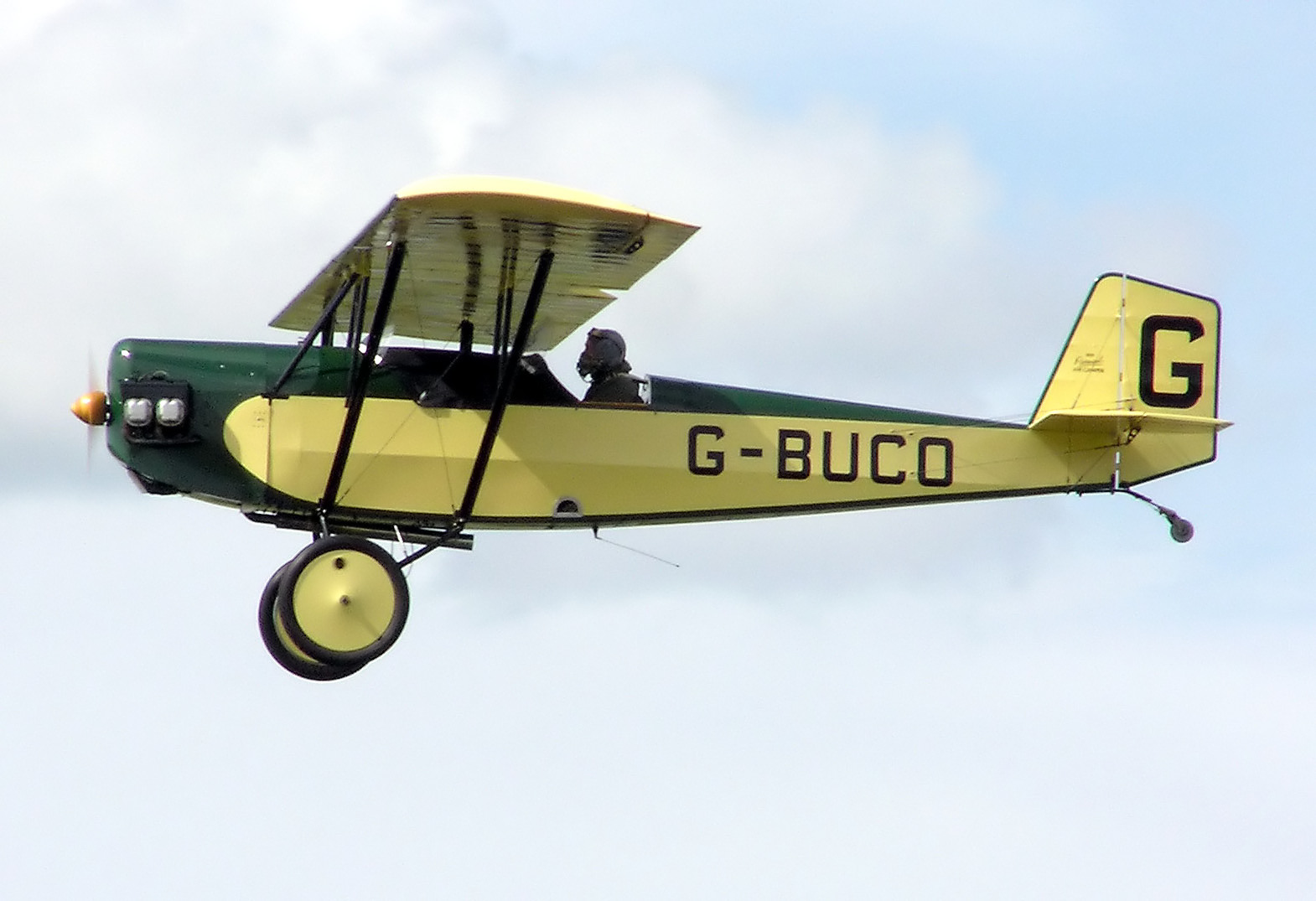
“Yes we can” is a slogan used by United States President Barack Obama in the 2008 Presidential Campaign which best describes Project Phoenix - a student led project at The University of Sheffield aiming to construct a full size 1920's single engine two seater Pietenpol Air Camper aircraft.
Hello,
My name is Andrei Roibu, I am an IEA and for the past 10 months (from February until December 2016) I worked as the Project Manager of this ground-breaking student endeavour. Today, I want to to tell you a bit about the project itself and its journey to date.
https://upload.wikimedia.org/wikipedia/commons/3/3b/Pietenpol.air.camper.g-buco.arp.jpg
Project Phoenix was first proposed to me by Dr. Simon Hayes at the end of 2015, when he came up with the idea of a student project aiming at constructing a full-size kit aircraft in order to showcase the abilities of our students, here at the University of Sheffield, and the technical and manufacturing capabilities of the workshops in the Diamond building. At that time, I was President of Simurq Aeronautics, a student-lead society aiming at constructing drones and RC planes and taking them to competitions. Honestly, when I first heard the idea I did not believe that it could be done, as it seemed too complex and too costly for students to reproduce. I held on to my doubts for months, all through Christmas and the 2015-16 winter exam season, however, Dr. Hayes kept pitching the idea to me and insisting that we can do it. Honestly, I don’t know what made me accept his project proposal, as I was still doubtful about the project's chances of success. To some extent, I was probably curious to see how far we could go with this seemingly insane idea until we reached that point where it would have become obvious it was too much to handle. Hence, Project Phoenix was born.
From February until April, the project team consisted of Dr. Simon Hayes, Mr. Richard Stockley (one of the Diamond technicians), Dr. Stephen Mason and I, worked mainly into looking at different kit airplanes and trying to find the required funding for the project. Our first major breakthrough came when we managed to receive a sponsorship for £11,000 from the University of Sheffield Alumni Fund, which came as a surprise to all of us considering that little to no student projects ever received such a large sponsorship. This was probably the moment where we started realizing the scale and magnitude of what we were planning on doing. At this point we were looking at building a Zenith STOL CH750 aircraft and we were estimating the entire project to run for 3 years, requiring a budget of around £60,000. This might seem as a big number, however we were quite confident that we could obtain the sum from further university grants and private company sponsorships, as we were already getting a lot of attention from the various engineering departments.
As April was coming to an end, so was my term at the helm of Simurq Aeronautics. The project, at that time named ‘The Alumni Aircraft Project’ – I know, not a very catchy name – was intended to be done in collaboration with Simurq, which made me assume that as my term ended so would my involvement with the project. It was at this point when Dr. Hayes asked me if I wanted to be the overall leader of the project, which took me by surprise. This put me in very delicate position, as beside the project I was managing two part-time jobs at the Sheffield Students’ Union while also studying towards my degree in Aerospace Engineering. The solution that I found was that of a joint student leadership, having myself as the Project Manager, in charge of all the non-technical aspects of the project and the overall management, and bringing a second person on board as the Technical Manager. My first choice for the role was a Mechanical Engineering student, which initially accepted and came on-board from April until May, however as the spring exam season kicked in, she decided that she needed to prioritize her studies. The second choice for the role was an avionics stream Aerospace Engineering student, which at that point was keen on getting relevant technical and managerial experience and had all the attributes for the position. At the moment of this blog’s writing, after my departure from the project, he has assumed full Project Manager status.
The next milestone in the history of Project Phoenix was the worldwide famous Brexit. In the weeks following the UK’s decision to leave the EU, the entire team met regularly in order to assess how this impacts us, realizing that the initial budget estimate was now overly ambitious in the looming future economic climate. This was the moment when we decided that we should adopt a simpler design, for which most if not all of the materials and tools could be bought on the already available funds, with any subsequent sponsorship or grant being used for further improvements and modifications. After an extensive market research, we decided on the Pietenpol Air Camper.
Over the summer, planning was done for the workshop, team structure, branding and a future sponsorship campaign. All the while, the project kept growing and growing, gaining more and more attention from the different departments within the University and from across faculties. At the start of the academic year, we ran a recruitment campaign and selected the team, thus kick starting the work on the project itself.
At this point in time, Project Phoenix is the flagship project of Aerospace Engineering in Sheffield and the largest undergraduate project ever undertook at the University of Sheffield. The projects is seeing the participation of over 30 students from across all the departments of the Faculty of Engineering and also from other faculties, such as Social Sciences. All levels of study are represented within the project, from first year students to postgraduates and PhDs, with the project members gaining substantial engineering and managerial experience.
Project Phoenix is registered with the Light Aircraft Association, which allows the construction of the aircraft using the original blueprints. The Pietenpol Air Camper is an empiric design, as such, it has never been modelled, and its design never analysed. Alongside construction, a dedicated research team within Project Phoenix is looking into potential ways of improving upon the design, analysing its structural dynamics and the airflow around the plane, utilising this data to implement our own flight simulator and publish research papers in engineering academic journals. Rigorous manufacturing standards are implemented throughout the construction process, insuring that the students participating in the technical teams obtain relevant manufacturing knowledge and the final aircraft receives its flight accreditation. Moreover, the project benefits from a dedicated management team, where a group of students are gaining valuable experience in managing the bureaucracy and regulations entailed by a project of this magnitude, while also helping insure a friendly climate for their peers working on the project. In addition to this, the project aims at promoting most if not all of the participating students, with the help of the University Marketing Department, through social and classical media, both on a local and nationwide level.
In the past 10 months, I have seen this project grow from a seemingly impossible idea to the largest undergraduate project ever undertaken at The University of Sheffield. I look back with pride on what we have achieved in such a short time while also looking to the future with great hope and great expectations. I have left Project Phoenix at the beginning of this month, due to academic and health reasons, however I am proud to be one of its’ founding fathers. Coming back to where we started, if I would be asked now if undergraduate students can build a full-size aircraft from scratch, I would proudly tell them:

“At the University of Sheffield, yes, we can!”
PHOENIX - PNG - CMYK-01.png

Tuesday, 31 March 2015

Global Engineering Challenge 2015 – To be or not to be, a global engineer?

By: Andrei-Claudiu Roibu


“I just want them to know
That I gave my all, did my best
Brought someone to happiness
Left this world a little better just because

I was here...”

This is how I would sum up the Global Engineering Challenge organised by the Engineers Without Borders in collaboration with The University of Sheffield. An activity designed to teach young engineering students the values of cross-cutting cultural cleavages, develop solutions for third world problems and so on and so forth. You can read more of this on the University webpage, for I am not going to reproduce what the official text says.

No, if you spend your time in reading this blog, then I will make sure it’s worthwhile and you will be able to understand how this activity works, and why I think that in the end, any student should take part in it.

Before I write anything else, let me just state that I believe that honesty is the highest form of respect you can show a person. Thus, I shall be honest with you and tell you that I never gave a single thought to developing world countries. Although I am come from a poor country, I am proud of it. I also believe that one should solve his own problems, be it a country or person. I became an engineer because I love the technology and lifestyle in western civilization, where I intend to stay and work.

We can get back to talking about the GEC, having cleared that. What is there to talk about? You would ask, considering that one of the reasons EWB runs this project is raising awareness among engineers of the problems in developing countries. Well, this is what I wish to tell you about. I wish to speak about all the other things that GEC teaches you IF you wish to the thought.

The first thing that it teaches you is how to work in a team formed out of people from different backgrounds and engineering fields. When you first hear of it, it sounds easy...let me tell you that it’s not, especially when everyone wants to be “boss” without doing any work. Luckily, I was blessed to work in a good team, where everyone did their job, and as unofficial team leader, I was more than pleased with the results. GEC week teaches you how to make a difference between your personal pride as an engineer and/or person and accept other people’s points of view. It is surprising in an interesting and often nice way to see how different ideas from different fields contribute to a project, and eventually things turn up much better than you would have ever expected.

The second thing that you learn is project management. As engineers, we will find ourselves needing to think about the feasibility of a project, because there are many things that can be theoretically done, but only a few that can actually be done in practice. GEC teaches you how to quantify what can or cannot be done, using specific tools such as SWOT and PESTLE analysis for the entire project, or Stakeholder Analysis in order to understand what are the needs of all the parties (or groups of people) that are involved somehow in that project. Also, as engineers working on a project, we often find ourselves needing to justify to second and third parties our decisions and choices. Decision matrixes are another very useful tool that one can use for this and GEC teaches you how to do. Speaking about justifications, a pivotal component in any project is the budget. Nothing is free in this world, and when designing a system as an engineer, you need to bear in mind that we live in a capitalist society (either if we like it or not) and in order to be successful, you need to achieve more for less, i.e. be efficient.
The third and maybe the most important thing that GEC will teach you, is how to manage your time effectively. The demonstrators have really strict deadlines for both the large, design task, and smaller activities. These time conditions are frankly annoying most of the time, and you’ll end up hating them and even giving up on doing some of the activities because of the hard deadlines. However, if you were in a real-life work environment, not meeting the deadline for even the most trivial of tasks could cost you your job and/or life’s work. It might sound pessimistic, but it is how the world works. In my team, we had a really hard time getting our heads around the time limits in the first two days. However, starting in the second day of the GEC week, we got our heads in the game, and decided on a clear way of handling tasks. Eventually, we ended up finishing our project early, and just sitting around and chatting for most of the final GEC day. I am quite proud of what we did, to be honest. Although we finished early, all our work was done properly and we managed to win “Best Communicated Solution” in our HUB.

I will cut it short here, as I probably bored you to death already. The take-home idea of this blog should be that if you keep an open head in any project in which you take part in, it is almost impossible not to learn at least one useful thing. I learned at least 3 useful skills doing GEC, and that is why I am honestly happy I took part in it.

For us as engineers, learning never stops, and I believe that the difference between a proper engineer and one that is an engineer just because he has a piece a paper saying that he is, that the first one never stops learning, either from nature, the people he works with, the projects he does or even events such as GEC. Vivere!

PS. I would like to thank my mates and colleagues from GEC, Hub R, Team 5: Dan, Max, Tony, Miguel and Terence – you guys were and are the best!


Monday, 12 January 2015

Meet our International Engineering Ambassadors: Andrei-Claudiu Roibu


Name:
Andrei-Claudiu Roibu (Andrei for friends ;) )

Course: Aerospace Engineering with a Year in Industry (MEng)

Nationality: Romanian
Hi all!  First thing first: I am from Romania and was born in eastern Romania in a town called Bicaz. My name is Andrei Roibu, and I am a student… wait just a minute. Am I the only one that thinks this is a little too mainstream and classical? Hope not. First thing you need to know about Sheffield: we like to do things our way.
Before I go on writing anything else, let me introduce you to Rascal Flatts, and their song: Life is a Highway (click to open link). I could honestly say that this song best describes the way I see life and myself. A little warning before anything else: you might find me a bit crazy, but don’t worry: harmless crazy.

Now why Rocket Science at the University of Sheffield?
Yes, I did say Rocket Science because that is what is may seem for many of you. However, it’s not quite so. Firstly, I went for Aerospace Engineering because I always like a challenge. Being an aerospace engineer offers you the chance to be a true “universal engineer” because you gain skills that can be used in almost any other field, ranging from Mechanical Engineering to Law and Management. More than that, the course offers me flexibility, and the first year (where I currently stand) is an introduction, that allows you to taste and choose what field you want to specialize in afterwards. This flexibility combined with a high standard of education offered by the University, ranked 69th in the World Times Higher Education, 5th for Aerospace Undergraduate in the UK by The Complete University Guide and 1st in the UK as Student Satisfaction by the Times Higher Education, convinced me to choose to come and study here.

So, why do you like it so much?
There are many things to say here. Probably the thing I enjoy most about Aerospace Engineering is its complexity and the challenging aspects of studying it. I grew up in a family of engineers, me being the 3rd generation so far. Being part of this team at Sheffield University seems to me like I am surrounded by the best engineers, not only present but also future.

And what about teaching and studying?
The answer to that question is teamwork: you and the staff. A lot of what we do here is individual work, just as one of our professors who always tells us that this is the way good engineers are born. The staff offers us guidance in all that we are doing, and although they have to handle more than a hundred students in each year and subject, you do feel that they care for you as an individual, and for your development. Moreover, we would really need a 30-hour day to get involved in all the activities and opportunities they offer us: from research opportunities for undergraduates to flight simulators, from conferences held by world renowned experts to projects where you build drones and human powered aircraft and so on. It’s truly amazing and it takes a while to take in… well, this if we don’t mention all the activities going on at the Students Union, of course.

Okay, fair enough. It sounds interesting. And how’s Sheffield as a city?
 When I started walking around the city center, I discovered a lively, green, modern city, one of the most lively I have ever seen. I discovered that it is THE safest and THE greenest in all the UK, and also one of the, if not THE cheapest to live in as a student (let’s admit it, we all have money issues). This, combined with a vivid cultural life (from theater and ballet to clubs and pubs) and the huge amount of facilities offered by The University of Sheffield and The Students Union, make Sheffield the best city for me. Honestly, I would take Sheffield instead of London in every day of the week.

Well, why not any other Uni? Why Sheffield Uni?
I will be brief here, because there is a brief answer. 1. Because they care for me, for you, for us as students and they prove this each and every day, from the moment you apply through UCAS to the day you graduate and beyond. 2. They are the best at what they are doing, and they strive to remain as such, and I feel like I belong among them, because I strive to be the best as well.

And what will you do after you graduate?
As I said above, I wish to be the best at what I do. I also like to plan ahead, long term. At the moment, after I graduate with masters after a five year course, I wish to go on and do my PhD. Where I will do it, I don’t yet know. All I know is that The University of Sheffield has high chances of seeing me around as a PhD student, because from what I’ve heard, we are in the top 3 universities in the UK in terms of research in aerospace, and by the time I finish, we might even be 1st. Afterwards, hopefully, a company will have me work for it, and in the distant future, who knows: write some history books, maybe go back into politics (no boo-ing, please), and definitely a family and kids.

Any last piece of advice?
Yes. This is what I tell all the people I talk with about coming to Uni. At first, choose with your heart. Choose what you want to do, what you will still want to do after 30 years of doing it, when you leave home for work. Afterwards, choose carefully the best country, city, university and course for you. For me, the best was here at the University of Sheffield. Take a look at the website, read a bit about it, and who knows, maybe it will be the best for you too.


For any Romanian readers requiring help or advice on the application process, or any other queries email me at aroibu1@sheffield.ac.uk. Take care and looking forward to hearing from you.